
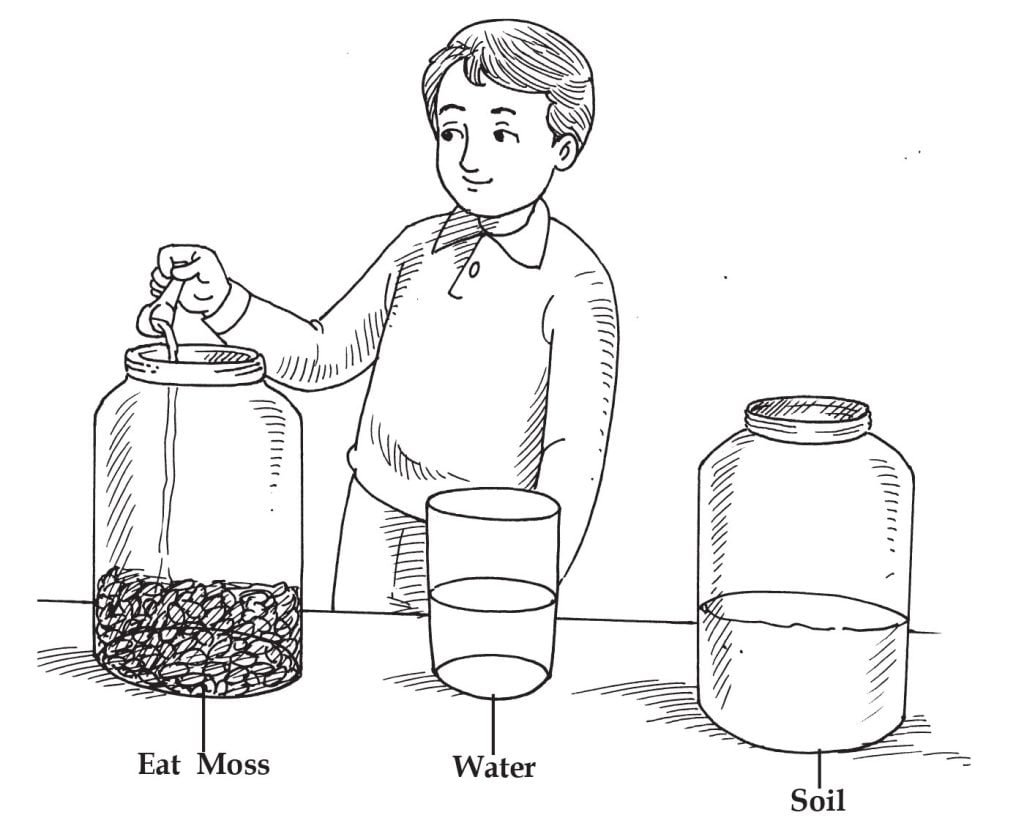
The purpose of this experiment is to determine why plants grow in sphagnum (peat moss).
Things Required:
Sphagnum moss (obtain from a garden supply store)
Soil (collect from a garden, under a tree, or a vacant lot)
2 quart (litre) jars
Measuring spoon-tablespoon (15 ml)
Measuring cup (250 ml)
Directions:
Pour 1 cup of soil into one jar, and one cup of sphagnum moss into the remaining jar. Add 1 spoon of water to the moss and observe any results. Continue to add water to the moss 1 spoon at a time until it will no longer soak up the water. Record the amount of water added.
Repeat the process by adding water 1 spoon at a time to the jar containing the soil. Record the amount of water that must be added before the soil no longer is able to soak it up. What would be the advantage of using sphagnum to grow plants in?
This Is What Happens:
The sphagnum moss is able to soak up much more water than the soil.
Science Behind It:
Sphagnum moss is commonly called peat moss and is used in growing plants. The moss acts like a dry sponge with cavities that the water can move into. Gardeners often mix the moss with soil or spread it around plants because the moss holds so much water. It is also used in potting plants that must be shipped to ensure that they stay moist.
At one time, physicians used this moss to cover wounds because it absorbed liquids so well. It was observed that wounds bound with the moss became infected less often than those covered with other dressings.