221 Facts About Earth

221 Facts About Earth221 Facts About Earth tells children about Earth’s beautiful resources, lives, waterfalls, Hills and many interesting and exciting facts.🌎📚

Types of Clouds

The classification of the clouds is done on the basis of their shapes and their heights in the sky. The clouds are classified according to height, expanse, density and transparency or opaqueness. ♦ Cirrus (8000-12,000m elevation): formed at high altitude. Thin and detached clouds having feathery appearance. They are white in colour. ♦ Cumulus (4,000-7,000m […]

Types of Clouds Read More »

Clouds

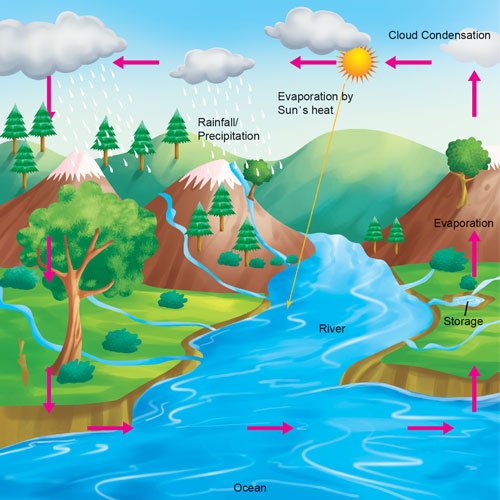
Clouds are an important part of the water cycle. When the water on the Earth’s surface gets warm, it gets evaporated and converted into water vapour. The warm air containing the vapour rises up in the atmosphere and slowly gets cooled. The cool air gets saturated with the vapour and loses its capacity to hold

Clouds Read More »

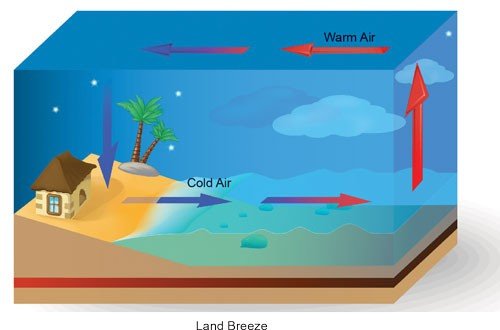
Land Breeze

The Earth’s surface cools faster than the sea after the Sun has set. As we know, the cool air is dense and has high-pressure, so the rapidly cooling Earth’s surface will have higher air-pressure over it than the sea. As a result, the movement of the air begins from a high-pressure area (Earth’s surface or

Land Breeze Read More »

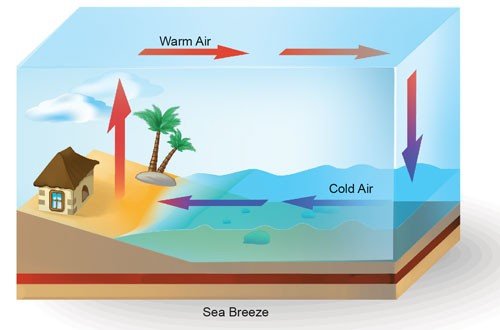
Sea Breeze

The surface of the Earth warms up more quickly in the morning than the surface of the water. This is the reason the air above the beach becomes warmer and thinner creating low-air pressure. While the air above the sea is cooler and denser, creating high pressure. This difference in the air pressures creates the

Sea Breeze Read More »

Weather

Weather is condition of the surrounding atmosphere at a particular time. It is described as a combination of various factors such as, temperature, moisture and air flow. However, the most crucial factor is heating and cooling of air through the Sun. Weather affects our life in many ways. For example, the type of shelter we

Weather Read More »

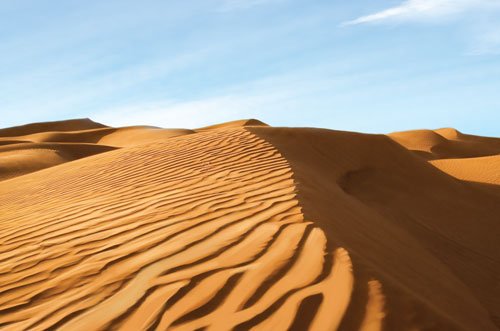
Desert

Temperature: Approximately 21°C to 48°C. Climate: Very hot climate in day time; daily temperature variations are extreme. Location on the Earth: Deserts are found in every continent and cover about one-fifth of Earth’s land area. Flora and Fauna: Saguaro cacti that grow in the Sonoran Desert of Arizona and northern Mexico expand like accordions to

Desert Read More »

Equatorial Zone

Temperature: Approximately 17°C to 30°C, consistently high temperature. Climate: Constantly hot and wet climate with plentiful precipitation with heavy cloud cover, and high humidity, with very little annual temperature variation. Location on the Earth: Lies within 12° latitude of the equator. Flora and Fauna: Broad-leaved trees, huge number of plants. Large mammals and small birds,

Equatorial Zone Read More »

Tropical Zone

Temperature: Approximately 20°C to 30°C. Climate: The climate is generally warm with two main seasons: wet season and dry season. Location on the Earth: This covers the land around and on either side of the equator. Flora and Fauna: Lush green forests and dense growth of bushes and trees form tropical forests. A variety of

Tropical Zone Read More »

Temperate Zone

Temperature: Approximately –6°C to 25°C. Climate: Temperate zone receives rainfall throughout the year and the temperature varies with seasons. Location on Earth: Between the equator and the North and South Poles this region is closer to the North and the South Pole. Flora and Fauna: Deciduous forests found in regions of the Northern hemisphere are

Temperate Zone Read More »

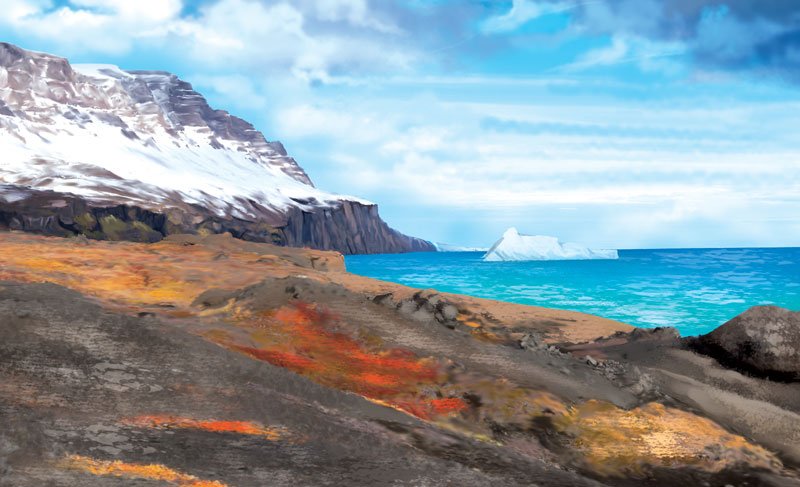
Tundra

Temperature: The temperature is approximately 17°C to –30°C, sub-freezing to moderately low precipitation. Climate: The climate is very harsh during winters with strong winds; however, summers are cool and pleasant. Location on Earth: Along the coast of the Arctic Ocean. Flora and Fauna: Due to frozen soil, no species of plants can be seen here.

Tundra Read More »

Shopping Cart