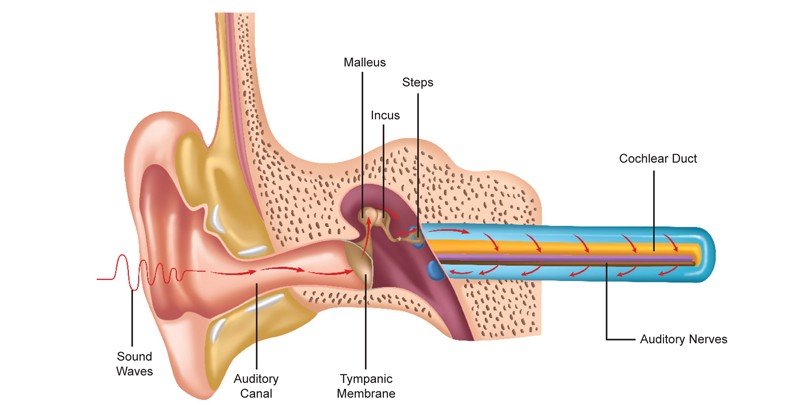
Auditory Nerves
The auditory nerves transmit the sound wave from the ear-drum to the auditory centre in the brain. These auditory nerves (VIII cranial nerve) are made by the association of vestibular nerve and the cochlear nerve.


The auditory nerves transmit the sound wave from the ear-drum to the auditory centre in the brain. These auditory nerves (VIII cranial nerve) are made by the association of vestibular nerve and the cochlear nerve.

The human ear is a hearing organ designed to collect sound vibrations, and then pass those vibrations to the brain through auditory nerves. The main part of the ear is located inside the skull. The ear has a complex structure; it has several small bones intricately arranged inside it. It has the smallest bone of

The olfactory portion of the nose is exclusively involved in the sensation of smell. The olfactory portion of the nose consists of: the olfactory epithelium, olfactory nerves and olfactory bulb. The olfactory epithelium is a soft patch on the roof of the nasal cavity. This epithelium has several olfactory hair cells connected to the olfactory

The nose has an internal air-filled chamber called the nasal cavity. Septum divides the nasal cavity into two sections. The septum walls consist of two skull bones: the ethmoid above and the nasal concha (below). Nasal cavity is connected with the throat. On the upper wall or the roof of the nasal cavity, the olfactory
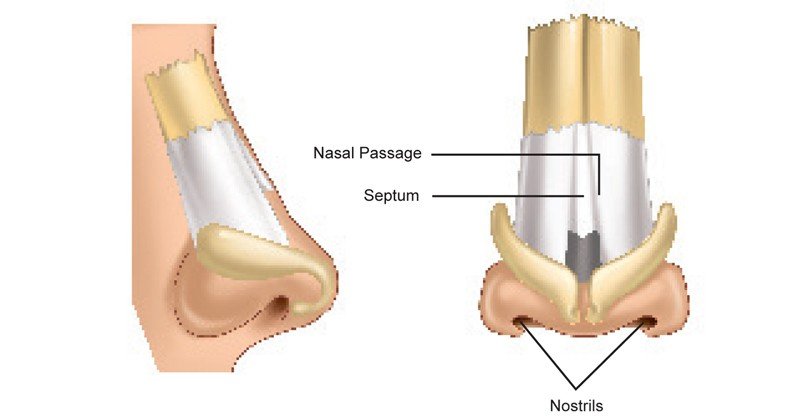
The nose is the sense organ for smell. It is connected with the olfactory nerves of the brain. The nose helps a person to smell and carry out one of the most important functions called the respiration. It works in coordination with the sense of taste. The main parts of the nose are: the two

Hypermetropia is another visual disorder. It is also known as long-sightedness or far- sightedness. In this condition, the eye focuses better on distant objects than nearby objects, hence nearby objects appear blurred (this is just opposite to myopia). Physiologically, a person presenting this disorder has smaller eyeballs than the normal size or cornea with smaller
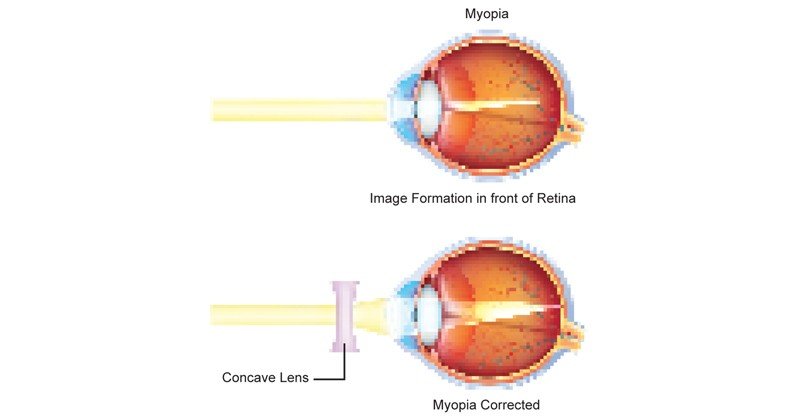
Myopia is a common visual deformity. It is also known as nearsightedness or short sightedness. In myopia, the eye focuses better on the objects that are nearer than the objects which are at a farther distance. In this visual disorder, a person has enlarged eyeballs or excessively curved cornea. This physiological defect alters the image
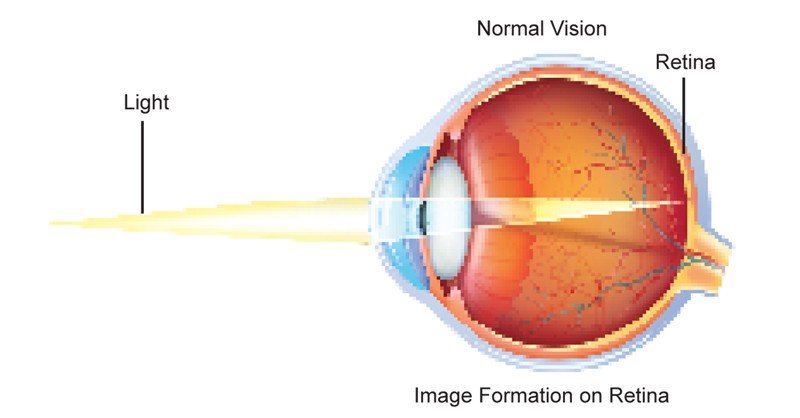
Image formation by an eye is based on the passage of light in the eye. It is an instant process. 1. Firstly, the light enters the eye and passes through the transparent cornea to the pupil in the centre of the iris. 2. Then, the adjustable lens and the fixed cornea focus the light rays
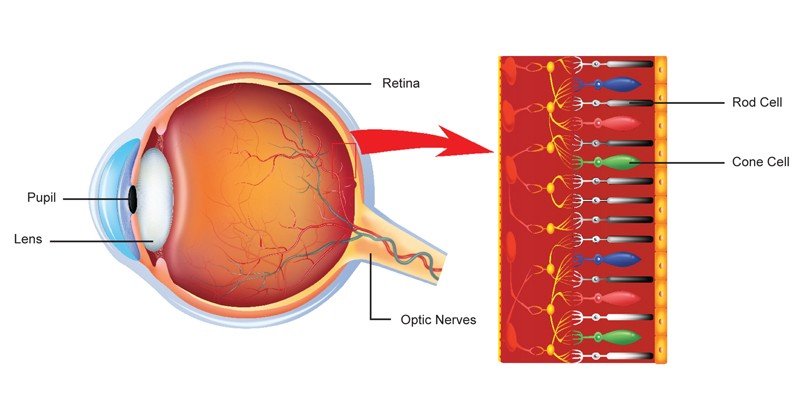
Pupil Both the eyes and the camera have a black dot in the centre. This black dot helps capture an image. In case of the eye, it is called the pupil which is an opening on the iris. It lets the light fall on the retina and acts as a regulator, i.e. it regulates the

Choroid is the middle layer located just after the sclera. Choroid is supplied with blood vessels and it forms the iris. There is a central opening in the choroid layer, the pupil. The main function of the choroid is to supply nutrients and oxygen to the sclera and the retina. The iris is a thin,

Sclera (white portion of the eye) is the outer sheath of the eyeball. Sclera protects the eye from damage as it is the toughest pigmented fibrous coat of the eye. Sclera consists of an inner circular muscle and an outer radial muscle. Sclera controls the amount of light entering the eye. The cornea is the

The eye is a delicate organ; it is the sense organ for vision. Eyes are connected with the optic nerves. The eye sockets of the skull in which the eyes are present are lined by soft tissues. Eyelids, eyelashes, eyebrows and tears protect the eye from dust and dirt. The special cells known as photo
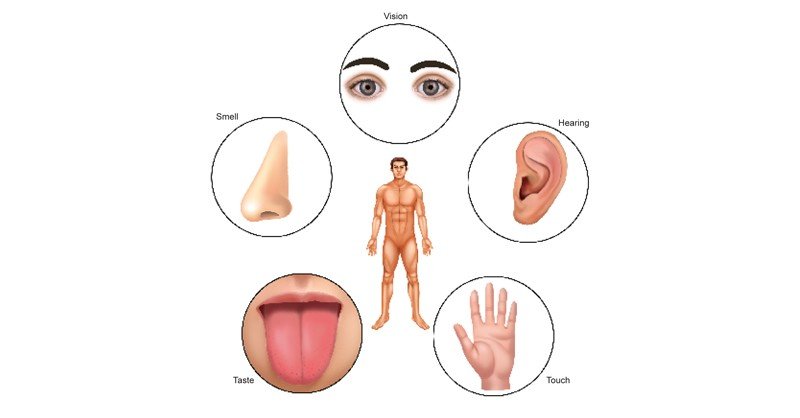
Sense organs connect a human body to the external environment by the means of five senses: vision, smell, taste, hearing and touch. These sense organs work in coordination with the nervous system. Hence, the central nervous system is responsible for sensing the external environments and responding accordingly. Each sense organ has specific receptors in the
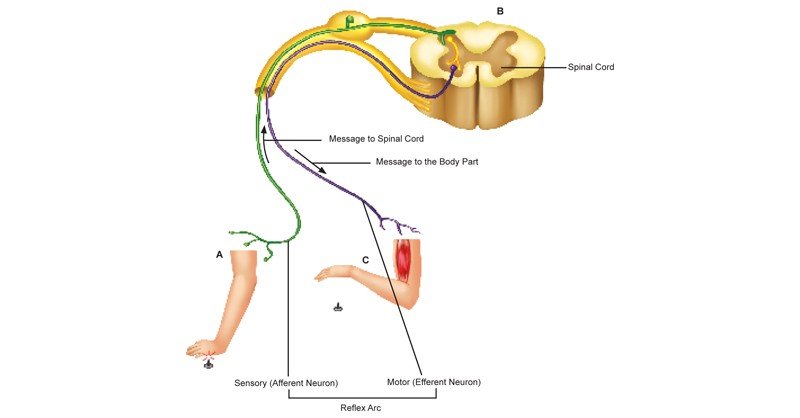
What is reflex action? We can understand it simply with this question. What happens when we accidently place our hand on a pin? Answer: We move away our hand instantly. This action, that our body performs automatically when there is an emergency is known as reflex action. It occurs quickly and unconsciously. In a reflex
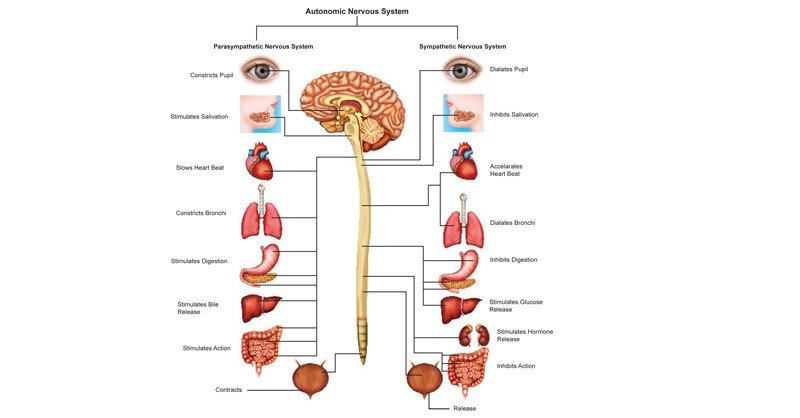
Autonomic System This part of the peripheral nervous system controls the involuntary movements in the body, such as–controlling and coordinating smooth and cardiac muscle functions, and the endocrine glands. This system is further divided into the sympathetic and the parasympathetic nervous system. These two sub-divisions of autonomic system work in opposition to each other to
Autonomic Nervous System (Parasympathetic Sympathetic Nervous System) Read More »