
Jan Koum | Great Entrepreneur Who Changed The World
Jan Koum | Great Entrepreneur Who Changed The World Read More »

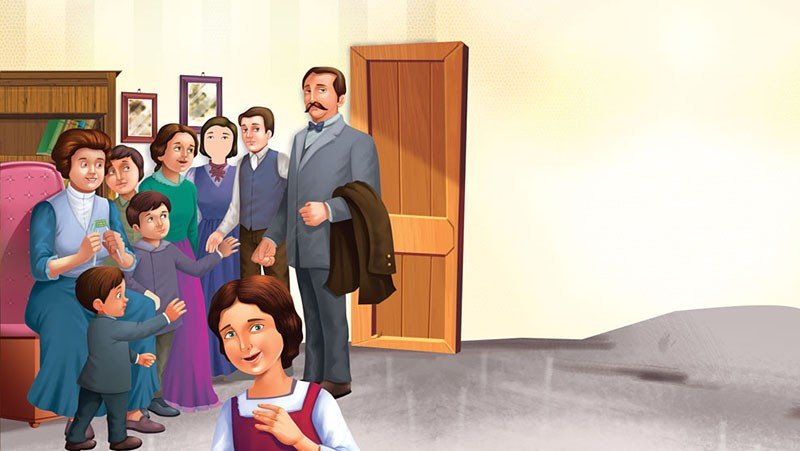
Thomas Alva Edison was a great inventor. He was born in Milan, Ohio, on February 11, 1847. He was the youngest of seven children. His middle name was Alva. His family called him ‘Al’. Edison’s family moved to Port Huron, Michigan, when he was a child. He spent most of his childhood there. Young Edison
THOMAS ALVA EDISON | Great Scientist who Changed The World Read More »
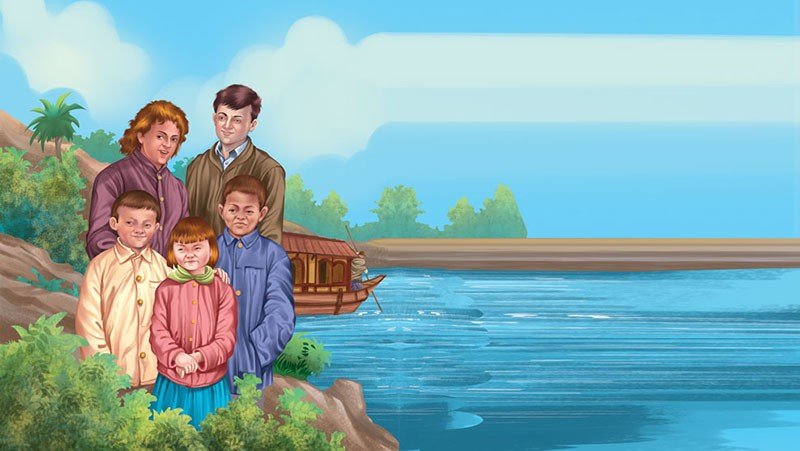
Isaac Newton was born on 4th January, 1643 in the county of Lincolnshire, England. His father’s name was also Isaac Newton! His father had died three months before he was born. Newton was tiny and very weak at birth. His mother said that he could fit into a quart size mug, which is about the
ISAAC NEWTON | Great Scientist who Changed The World Read More »
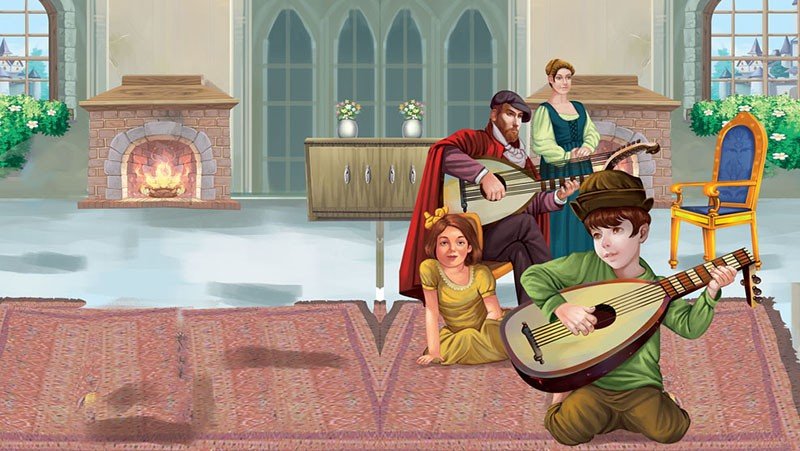
Born in Pisa, Italy on 15th February, 1564, Galileo grew up with his six brothers and sisters during the Italian Renaissance. His father, Vincenzo Galilei, was a musician, and hence Galileo too was fond of music, sounds and rhythms. Galileo began his education at 10, when he moved to Florence along with his family. He
Galileo Galilei | Great Scientist who Changed The World Read More »

Sclera (white portion of the eye) is the outer sheath of the eyeball. Sclera protects the eye from damage as it is the toughest pigmented fibrous coat of the eye. Sclera consists of an inner circular muscle and an outer radial muscle. Sclera controls the amount of light entering the eye. The cornea is the

The eye is a delicate organ; it is the sense organ for vision. Eyes are connected with the optic nerves. The eye sockets of the skull in which the eyes are present are lined by soft tissues. Eyelids, eyelashes, eyebrows and tears protect the eye from dust and dirt. The special cells known as photo
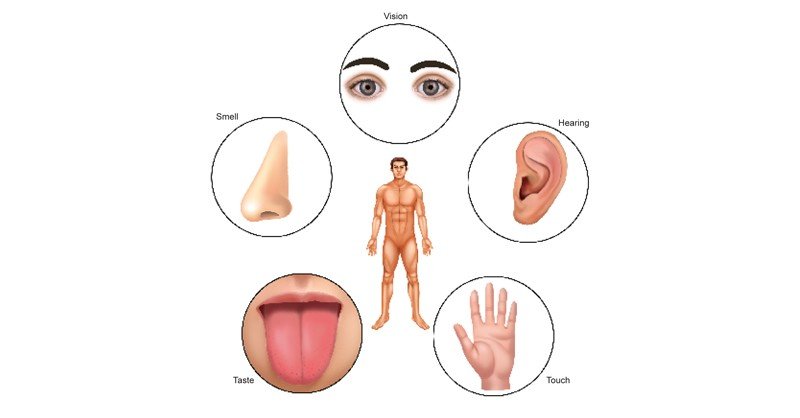
Sense organs connect a human body to the external environment by the means of five senses: vision, smell, taste, hearing and touch. These sense organs work in coordination with the nervous system. Hence, the central nervous system is responsible for sensing the external environments and responding accordingly. Each sense organ has specific receptors in the
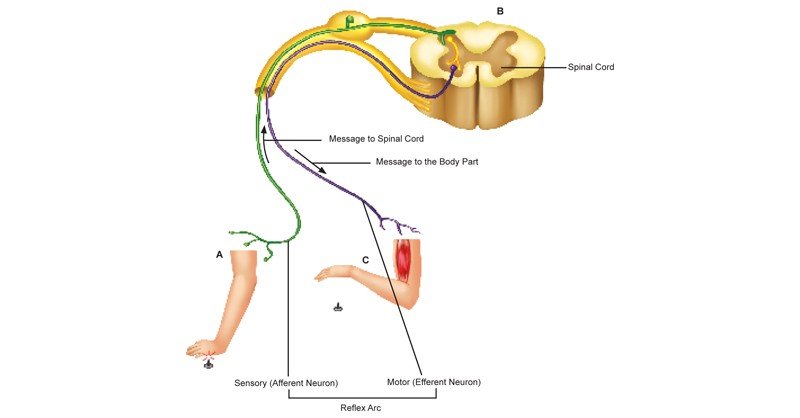
What is reflex action? We can understand it simply with this question. What happens when we accidently place our hand on a pin? Answer: We move away our hand instantly. This action, that our body performs automatically when there is an emergency is known as reflex action. It occurs quickly and unconsciously. In a reflex
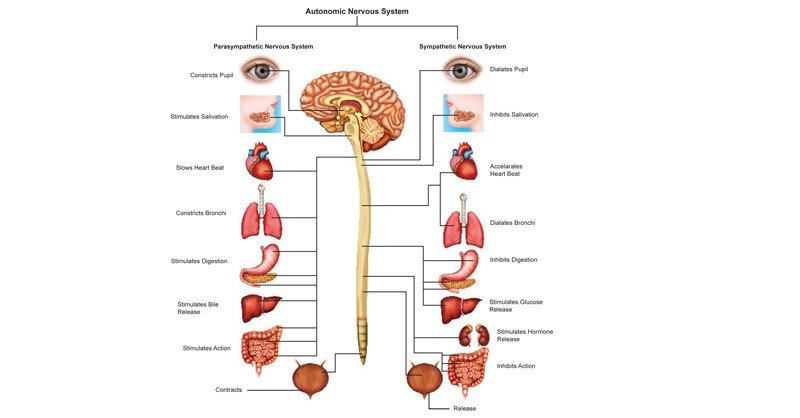
Autonomic System This part of the peripheral nervous system controls the involuntary movements in the body, such as–controlling and coordinating smooth and cardiac muscle functions, and the endocrine glands. This system is further divided into the sympathetic and the parasympathetic nervous system. These two sub-divisions of autonomic system work in opposition to each other to
Autonomic Nervous System (Parasympathetic Sympathetic Nervous System) Read More »
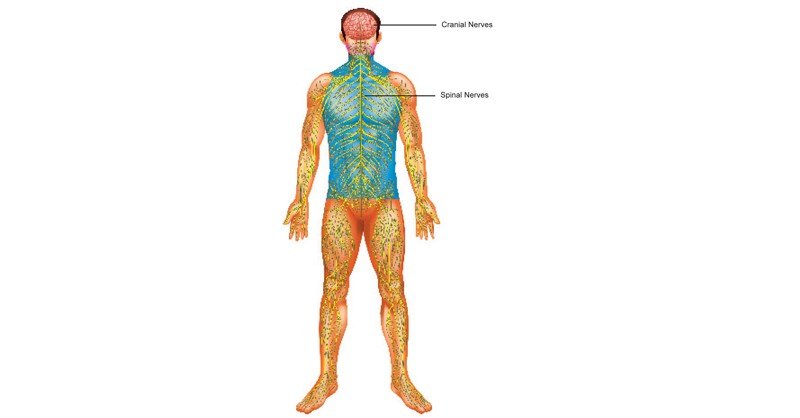
Spinal Nerves The spinal nerves are part of the peripheral nervous system. These nerves arise directly from the spinal cord. There are 31 pairs of spinal nerves in the peripheral nervous system. The major function of these nerves is to exchange sensory, motor and autonomic signals between the spinal cord and the body. Cranial Nerves

The part of the peripheral nervous system that sends motor impulses to skeletal muscles is the somatic nervous system. The sensory neurons (afferent neuron) and the motor neurons (efferent neuron) are the part of this nervous system. The main function of somatic nervous system is to exchange impulses between the central nervous system and organs,