
Sages and seers of ancient India were renowned for their astounding intellect and prodigal memory, thanks to techniques of mind control they had perfected with relentless pursuit and perseverance. Indeed they performed miracles with their ability to remember and recall at will. Thus they could muster by steeling their mind and body with the help of ‘yoga’, the wonder way to harness physical and mental energies, which was part of their daily routine—
For fine tuning your intellect and memory, take recourse to yoga and Pranayama (the breathing exercise) on a regular basis. Come, let us know more about these holistic exercises—
Padmasana (Lotus Pose)
It is called Padmasana because while performing it, legs appear in the form of a lotus.
Method : Sit on the ground and stretch forward your legs, keeping them together. Now left foot should be placed over the right thigh, and right foot over the left thigh, making sure that the heels touch the abdomen on both sides on the either side of nail. Keep the hands on the knees. Keep the head and back portion erect.
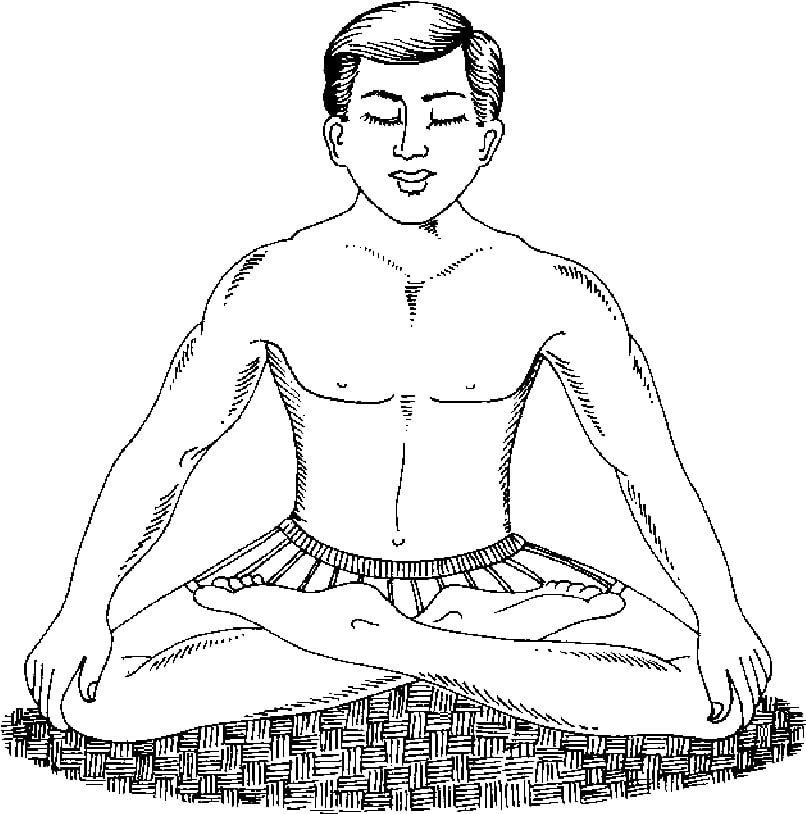
Both the feet should touch the ground, and eyes be kept closed. This asana can be utilised for doing Pranayama. If you wish, you can join index finger and thumbs, base of thumb resting on index finger’s nail, a sign of Pranayama Mudra.
Benefits : Padmasan, when exercised daily, helps to restrain mind’s meandering. With its regular practice, you can sharpen your memory and increase your longevity. This posture is especially beneficial for students and the intellectuals.
Siddhasana
Be seated on the carpeted floor. Stretch out both the legs in front. Keep your spine straight up and firm. Look in front keep the hands down on the floor. Breathe normally. This is the position of readiness.
Steps for Practice
❑ Fold the left leg back from the knee and bring the foot in front. Then stretch the toes and ankle of the left leg and try to bring them in a straight line. In case you find it difficult to bring them in a straight lines, stretch them only as much as possible. Bring the heel near the testicles without pressing against them. Now your left knee should be on the floor. In case the knee cannot touch the floor, let it remain a little up and raised.
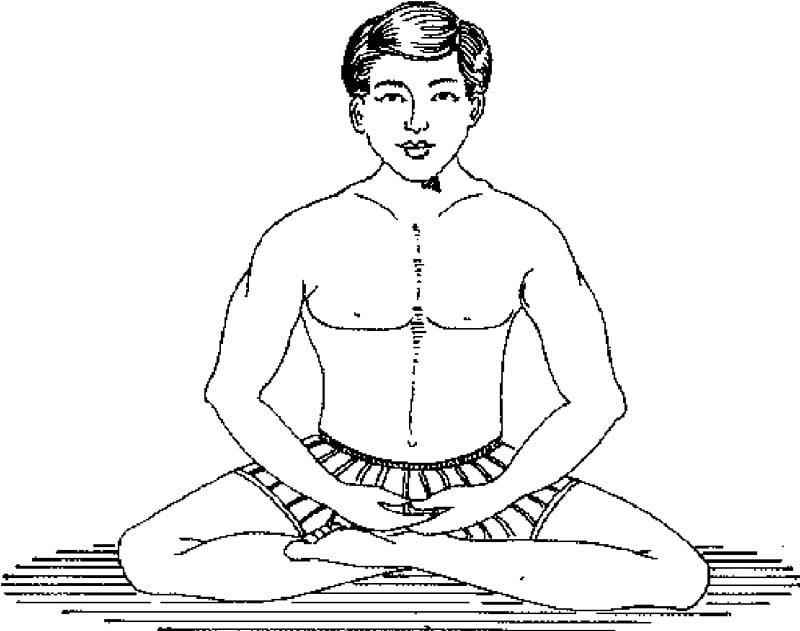
❑ Now fold the right leg at the knee and bring the right foot on the top of the left foot. Keep the right heel just above the left heel. Then stretch the ankle of the right leg while keeping the right knee also on the floor. Keep the legs in the same condition. Do not put any pressure on the testicles.
❑ Stretch out both the hands. Make a circular shape with your thumb and the index finger in each hand. Then stretch out the remaining three fingers of each hand and keep them firmly together. Now put the right wrist on the right knee and the left wrist on the left knee. Make the arms and the hands tight. Keep the spine straight and firm. Fingers pointing downwards. Breathe normally.
❑ Stay in this position for about one minute. After remaining in the same position for about one minute, loosen the fingers of both the hands. Then lift up the right leg by hand and put it down on the floor and stretch out the legs. After resting for a few seconds repeat once more by alternating the legs. This time your right foot will be underneath and the left foot will be on the top. Stay in this asana again for about a minute.
Benefits : It increases longevity, enhances intellect and fine tunes ability to memorise. Apart from these, this exercise enables you to remain seated comfortably even for a long stretches of time.
Vajrasana
Method : Kneel down on the floor, letting your big toes, legs and knees touch the ground. Now rest your buttocks on your knees, your heels bent inwards and thumbs touching each other. Place the palms on the knees, keeping your spine erect but relaxed and flexible. Breathing should be even, deep and slow. Expand your chest, drawing the abdominal muscles inwards.
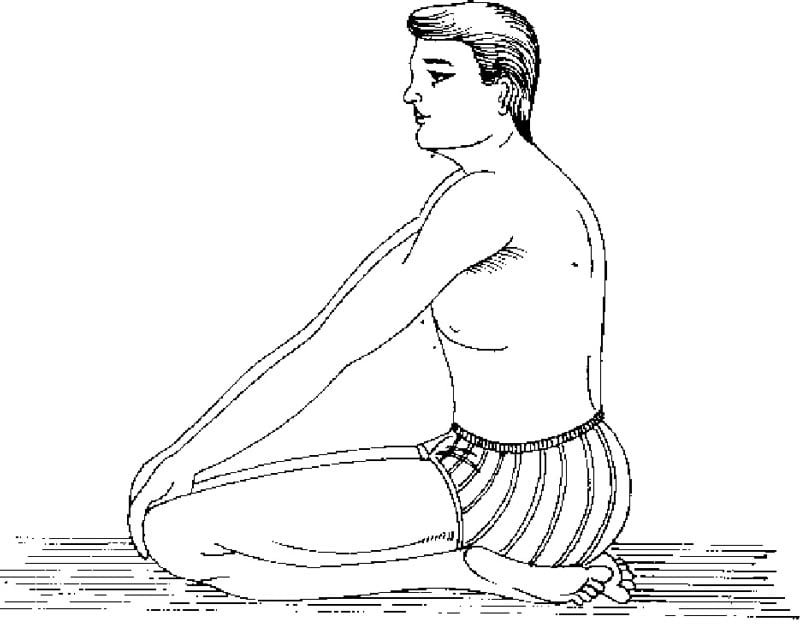
Benefits : This yogic exercise in uniquely beneficial for muscles of heart and thereby contributes to the overall health and wellbeing of an individual. It also enhances intellectual acumen and will power.
Sukhasana
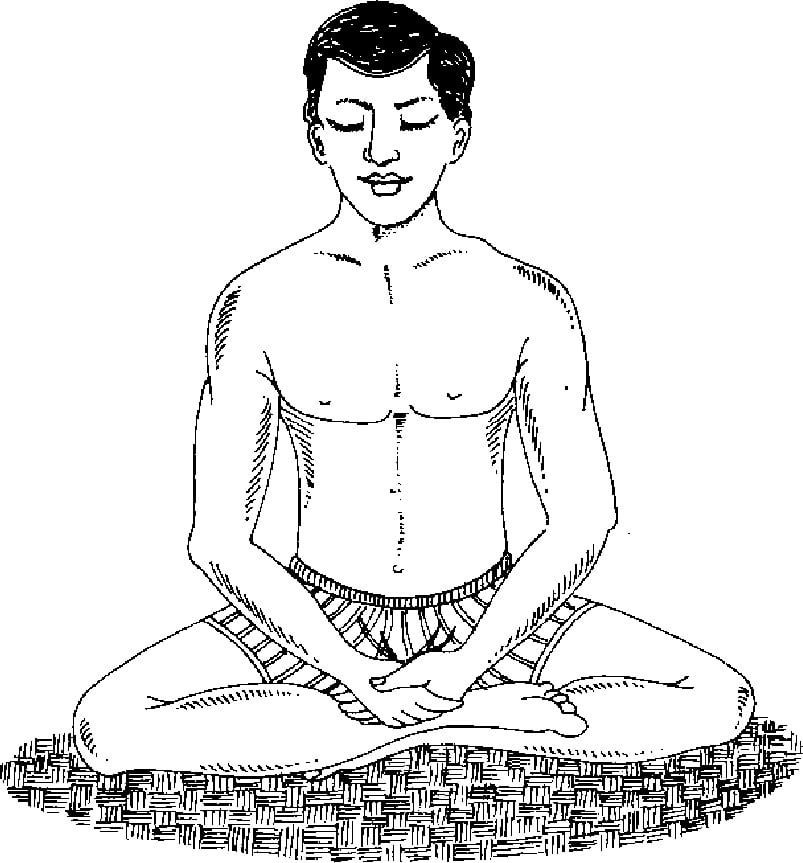
Benefits : Practicing it regularly is as beneficial as Padmasana, especially in improving your memory.
Sarpasana
Method : Lie flat on the ground, abdominal portion touching the ground. Straighten both the arms, palms touching the ground. Now bring the palms at level with both sides of abdomen. Slowly lift your neck and torso in such a way that whole body rests on your palms. Now lift your neck upwards gradually and try to look upwards as far and as conveniently you can. Let the toes touch the ground and palms securely resting on the ground. Do not let your elbows bend down. Stay in the position as long you can. When you feel suffocated or when there is a feeling that you can’t endure/continue any more, then slowly get back to original position from where you had started. After the asana is over, loosen your limbs and relax.
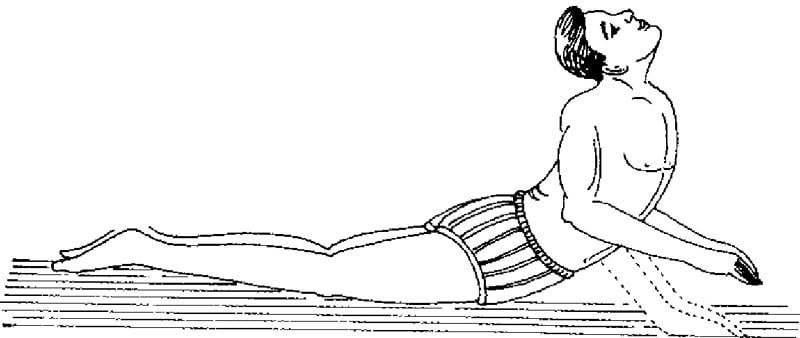
Benefits : Sarpasana when performed regularly, improves intellect, memory power, occular vision, longevity and youthful vigour. As the exercise involves raising of the bodybulk in prostrate position, it impacts the entire body from head to toe. Ergo, like Shirshasana, it is panacea for ailment of all types.
Pranayama
Our nose has two nostrils, the left one is called ‘Chandra Nari’ and the right one is called ‘Surya Nari’. One denotes cool and the other heat, one is active at night while the other is active during the day. When we inhale the breath, it is cold but, when exhale, it is hot. There are certain ascities who can easily forecast death time of a person from the determination of breathing process, time and speed of breathing as, after all, it is the breath which is the vital force of our moods, climatic changes, etc. Lunar and solar phases and eclipses affect changes in nature, world events, lives of all persons, etc. First of all breath through one nostril only, closing the other with the index finger of your hand. Now retain the breath as long and as conveniently you can. Thereafter, slowly breath out the finger. Before you exhale, the nostril, through which you had breathed should be closed. After a reasonable pause, follow the same process from the other nostril. Inhalation and breathing processes should be slow and uniform.
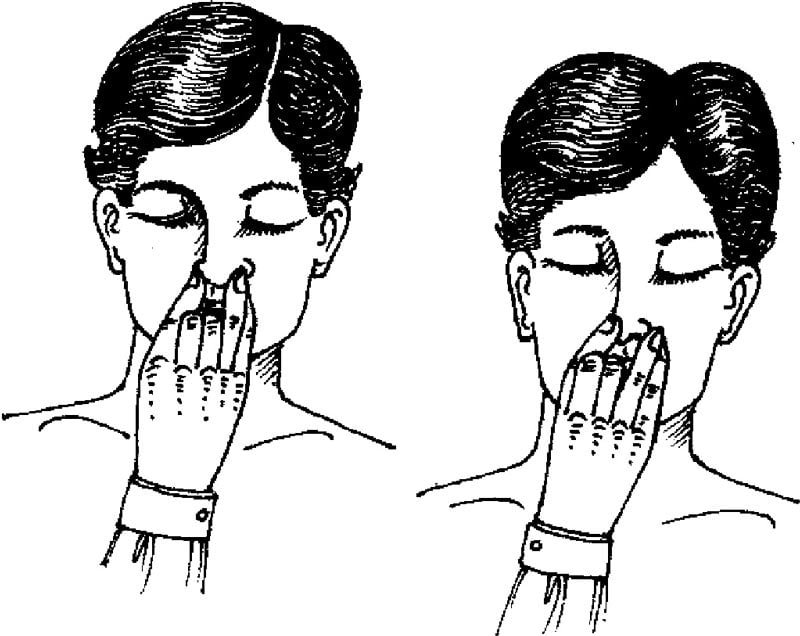
Benefits : Pranayama boosts up intellect, takes memory threshold to new heights, and most of all relieves tension and lethargy.
Prayer
It is customary to begin work with prayer on lips. Indeed, prayer does wonders in putting mind and body in proper gear. Present day mad rush and perky life style needs sedating and soothing touch of heartfelt prayer all the more. It does a lot good even to your imagination, creativity, and cerebral power.
To pray stand in attention position at a proper place, keeping body, head to toe, upright and straight. Then close your eyes, fold your hands with paired thumbs touching your chest. Raise conjoined phalanges to have thumbtips pressing adam’s apples in middle of neck. Let your forearms press gently on to your chest in quintessential pose of Indian ‘Namaskar.’
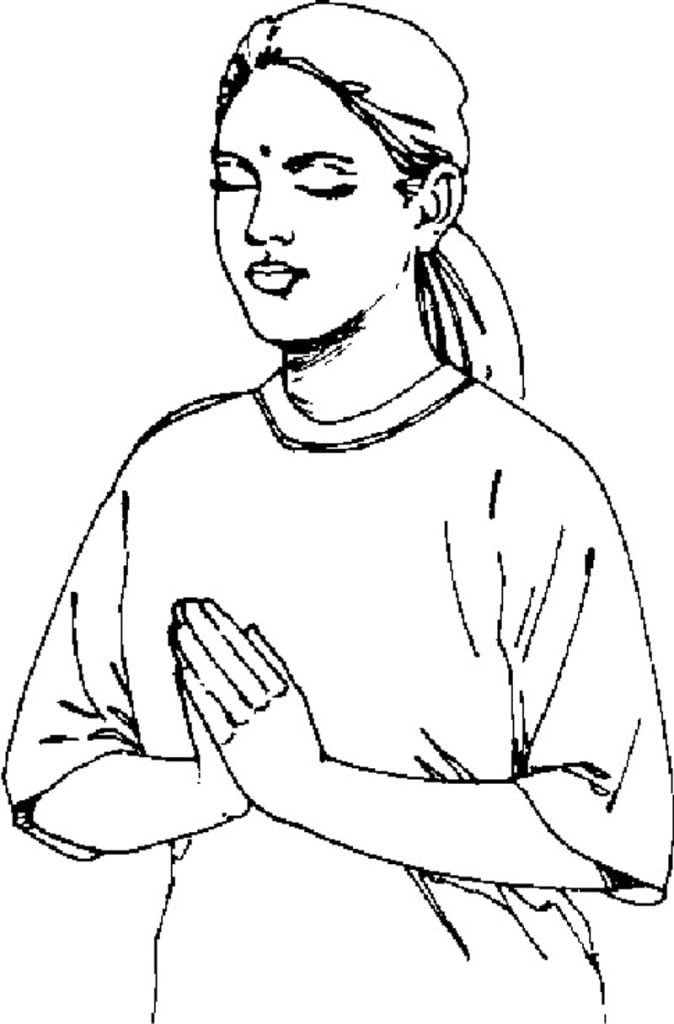
Standing thus, jettison wayward thoughts, concentrate your mind, and pray to almighty. In same measure as your concentration builds up relax your arms and butted palms. Do this for 5 to 10 minutes, increasing this time duration subsequently after a couple of weeks.
Benefits : Prayer promotes mental concentration which is vital for success in any kind of undertaking. Apart from polishing intellect, it releases one from debilitating mental blocks. Reverend Gautam Buddha, the enlightened one, achieved supreme bliss (nirvana) by taking recourse to prayer only.
Exercise to boost mental development
Stand straight on ground, feet joined in attention position. Keeping mouth shut, tilt your head up and back as far as possible. Look up to skyline above keeping both eyes wide open. Speed up breathing, blowing hard in and out of nasal passages focussing attention on top of your skull (head). Do this exercise a minimum 25 times in one go. Later as you may increase this number.
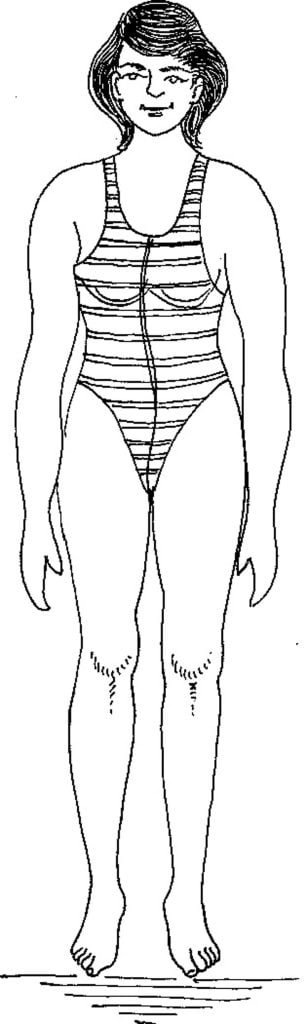
Benefit : It removes all stumbling blocks that come in way of brain power development nurtures and and purifies intellect, and sharpens memory.
Exercise to Boost up Memory power
Stand in attention position, bodyline taut and straight. Close both eyes and lower down chin to touch in space on top of rib-cage—at junction of two shoulder bones. Visualise centre of memory deep within brain matrix and focus attention on same. Breathe in deeply imagining that memory centre is enriched by incoming oxygen. Breathing out ought to be as forceful as breathing-in. Repeat this drill for 10 to 15 minutes.
Benefits : It has curative effect on several of mental and psychological disorders and therby it strengthens memory significantly.
Exercise to make memory better
Stand upright as if to a P.T. command of ‘attention’. Look straight forward and focus attention on a spot about a yard and a half ahead of you—taking care not to bend your neck. Freeze your thoughts to a single pointed concentration and breathe in deeply, and then breathe out with equal force. Do this for a minimum 25 times.
Benefits : This drill is wonderful for students. A regular practice of it keeps mind diseasefree. Insanity, delusions, memory lapse, depression and such like nervous disorders are kept at bay; and working capacity ups by leaps and bounds.