
Childhood is a stage when an individual passes through all such phases of development which its host society has already passed. Difference is of time. Society took thousands of years to evolve to this present stage. Whereas a child does so in a couple of years’s time. So to say, vis-a-vis human society, a human child develops on a faster time scale.
Initial stages of child’s societal development
A child is scarce attracted to another child so long as all its life needs are being adequately attended to. According to experts a child in such protection responds only to irritants that are harsh and significant. By the time a child is 3 months old, its eyes and ears are enable enough to discriminate different sounds and movements.
Generally it is only to adults that children address their early responses and reactions. One of the reasons for this being their physical contact with them. Presence of one or many is comforting for a child. Left alone, child weeps. At times a child cries just to draw elders’ attention. Learning from senior’s mannerisms, facial expressions and body language is a child’s primary training. His/her journey of societal development begins right from here.
As the baby crosses 4 months of age, it learns to compromise on lap. Also, it recognises faces and voices, and gives a smile on seeing a friendly person. This child laughs back when ticked or wheedled to do so. At 5 to 6 months stage young one is able to differentiate between anger and affection. It shows fear and reluctance on interface with stranger. Also, this age-group often resorts to hitting and kicking on bed to force people to attend them.
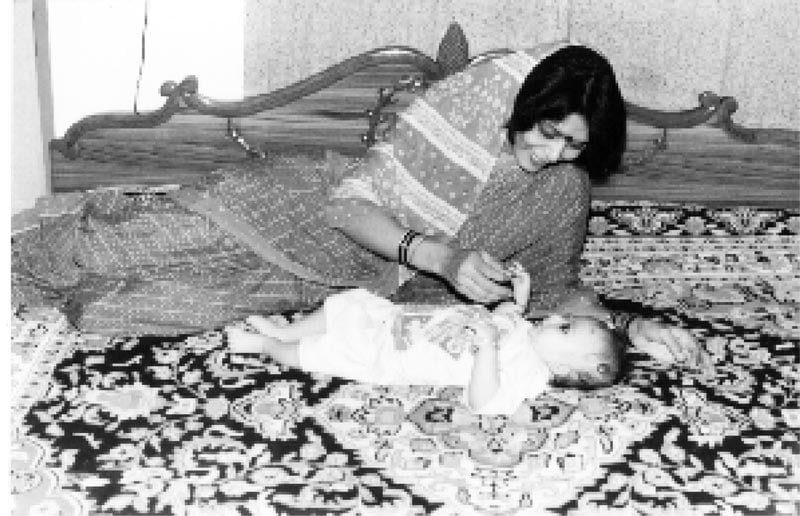
Eight to nine months rung enables child to mimic voices and mannerisms of his near and dear ones. When one year old, the baby conveys absolute ‘NO’ to strangers. One and a half year toddler starts liking company of elders. A two years old baby likes to share execution of domestic chores with other members of household. It is at this stage that the seeds of societal ethos and filial bonding are laid in child’s consciousness. Because interaction that gets going between baby and its environment, though at a low level, is significant nevertheless.
Play way learning, shoving and snatching become part of bonafide intermingling. Societal development of child, at this stage, unfolds under following distinct categories :
1. Imitation. 2. Dependence. 3. Envy. 4.Shyness. 5. Obstinacy. 6. Camaraderie. 7. Attention pondering 8. Bellingerence.
Early childhood
The second stage of a child’s societal development is early childhood stage. Child psychologists have calibrated this stage from age 2 years to 6 years. It is that period which sees a child cross prencints of household and explore its neighbourhood and environment. Whatever it learn during this phase of its growth, leaves deep and long lasting impact on rest of its life.
Those children who go to school develop faster on societal scale as compared to those who don’t. A 3-4 years’ old gets on to playing in groups, and making friends. As a child grows older its idea of camaraderie as well as the circle of acquaintance changes. Aversion to squabbles becomes stronger by the day. During prechildhood stage an infant passes through a series of behavioural drills. These are :
Fighting. 2. Animated arguments. 3. Chiding. 4. Aggression. 5. Trespassing. 6. Cooperating. 7. Envy. 8. Compassion. 9. Dependence. 10. Camaraderie. 11. Sympathy. 12. Desire for socialising, etc.
Psychologists aver that aggression in a 5 year old child is at its peak acuity. There after it comes down gradually. Even its ‘repeatability’ goes into a downward spiral.
Propensity to fight
As contacts and friends circle of a child grow with passage of time, bellingerence too comes to surface. 3 to 4 years old are the most quarrelsome. But as adjustment and cooperation becomes way of life, spats come down. Per se, it is hard for a child to see some one else playing with his/her toys, or snatch away a prized possession. Under such situations child looses its calm and goes into a frenzy. This may be in the shape of offence, squabble, nailing, biting, pushing and shouting at. Chiding, as per experts, is a kind of silent attack, generally aimed at a junior or a weaker child. By and large it is children with a sense of insecurity and an inferiority complex that resort to an insinuating behaviour. According to our survey, boys are more prone to abusive behaviour as compared to girls.
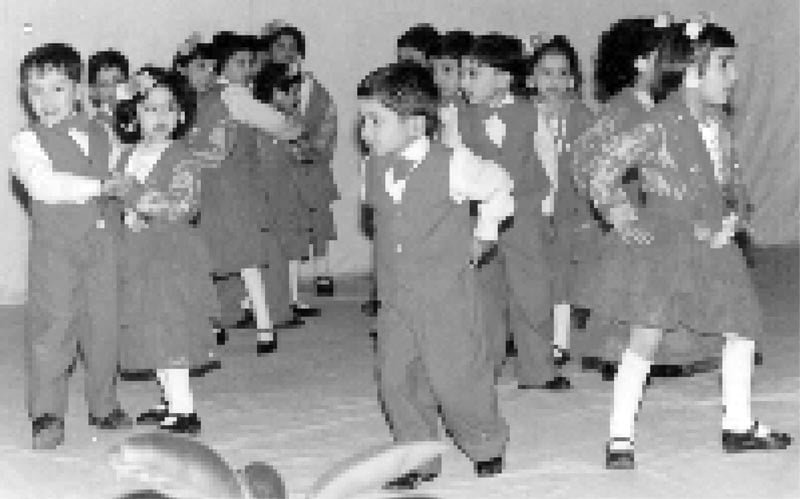
A child begins its naughty pranks at about one and a half years. By 4 year of age this tendency reaches its peak. It is right here that children start vying with each other. The competition streak is more palpable in low-income groups as compared to children from better off families. Significantly, selfishness is top notch in a 4 years old. But thereafter, there is a realisation that self serving attitude misfits in society. This awakening makes youngsters turn to camaraderie and generosity.
Study by Harris, Bryan and Valbeck reveals that children from rich families are selfish in direct proportion to their fortunes. But those from middle class families are compassionate and large hearted.
Child psychologists aver that keener the desire in young ones to seek approval and appreciation from their parents and kins, greater the level of their societal development. This is also noticed that in matters that are beyond its reach and capacity, the child tend to depend on others. This dependence begins from home but subsequently outside environment is also accepted. The greater the sense of insecurity in a child, the greater the degree of its dependence on others.
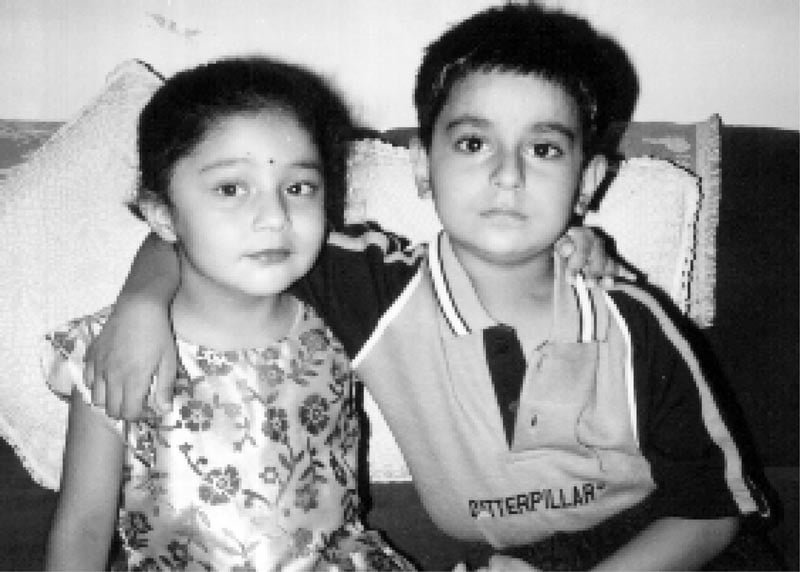
To begin with, children befriend their own brothers and sisters. Subsequently they bond up with their play mates. Then on their camaraderie embraces their class mates and whosoever comes in intimate contact with them. A girl child is always more friendly and cooperative as compared to a boy child. In general children start feeling for others as they cross 4 years of their age.
Over protection and crass neglect, both can cripple a child’s unfolding. These flaws of parenting lower self confidence of a growing child.
Post childhood
This phase of human development extends from 6-7 years of age upto eleven years, and is characterised by coherence of cerebral activity, and finesse of dialect. The child develops a liking for outdoor activities, and exhibits dexterity in art and craft. Its social circle enlarges, and societal ethos influence its thoughts and actions.
During this stage children yearn for social recognition. This yearing in more acute in those who feel insecure and unwanted, as also in those who are envious, fearful and overdependent on others. Children are more responsive and receptive to suggestions from their colleagues. Indeed they pay attention to their elder’s counsel as well, but with subdued enthusiasm.
Eminent thinker Dr. Gopalji Mishra studied later-childhood and observed that children in this phase of their life love scampering ahead of others. This contest arises out of their desire to win approval, favour and love of their elders. Games are played in a spirit of keen competitiveness. Greater the spirit of sportsmanship, better the child’s societal development.
On the last step of later-childhood, young one grows conscious of societal hierarchy. He gets a feel of who-is-on-his-side and who in opposite camp, and behaves accordingly. This incidentally is child’s initiation into maturity, wisdom, and the sense of responsibility which would subsequently make it an adult member of the society. Children from big size families, or joint families, are quicker to understand and shoulder responsibilities. Here too, girls outshine boys in discharge of social obligations.
Teenage
This stage begins at eleven, and ends at eighteen. It is during this interregnum that a child’s social development peaks and concludes. Precepts of childhood are perfected in this phase. A twilight period between childhood and adult, teenage promotes—towards its flag end—a desire to revolt against social order.
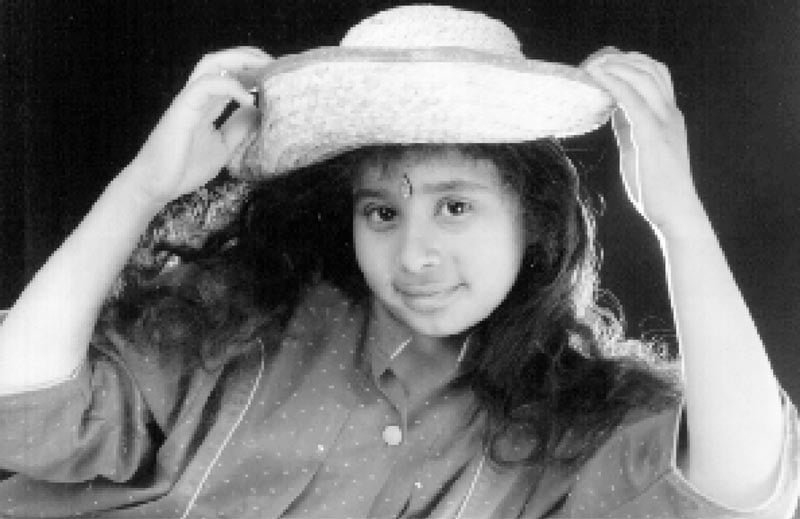
This resistance at a psychological level shouldn’t be construed to mean a handicap either for society or for the child. This stage in also called a plateau. It’s hard to say when exactly a child begins to question norms. This threshold is different for different people. But generally speaking a girl of 13 and a boy of 14 are at peak of maverism.
A seeming stasis of child’s social growth soon disappears and notwithstanding rebellion, child moves ahead on road of maturity and adulthood. Its pace of physical and social development is nearly complete. Children start behaving almost like adult. Their dabbling in hustle and bustle of every day life gives them a sense of stability and belonging, and enables them to plan their career and future course of action in life.
Thus there is a continuity all through the span of a child’s societal development from the day of its birth to 18 year of its age. At places this vibe is positive and at places negative. The net result nevertheless is a graceful transition from child to man.
CHILDREN ARE SWEET AT HEART
❑ Trust and innocence are two elements found only in children, no where else.
—Dante
❑ The best route to child’s development is to keep them in their wits.
—Wald
❑ Child is father of man.
—Words Worth
❑ A wise son makes a contended father.
—Bible
❑ Give your children self-esteem and sanguine ethos.
—Swami Dayanand ❑ One who pricks a child, can scarce please Almighty.
—Prophet Mohhamad
❑ A child’s heart is God’s heart.
—Mahavir
❑ Welfare of tiny tots is biggest of charity.
—Gita
❑ Adore children for their sheer beauty and innocence, ignoring what they say.
—Osho
❑ The youngest of infants are nearest to God, even as youngest of planet are nearest to Sun.
—Rishter
❑ Children are like adults, even as they know not how to benefit from experience of others.
—Socrates
❑ Do you know who is a child? It is to trust in love, to believe in beauty, and to have faith in faith.
—Frama’s Tomson
❑ Weeping is weapon for children.
—Ramayana
❑ Compassion for kids is another name for humanity.
—Gautam Buddha
❑ Grandeur isn’t there in luxuries of living. He alone is great whose soul in pious.
—Premchand
❑ Small children are reflections of God, the supreme creator.
—Saney Guruji
❑ Teach silence to your child, and he/she will turn out to be a very good speaker.
—Franklin
Remember
❑ What is personality? It is sum total of a man’s merits of head and heart. His external and internal self. External traits comprise his looks and appearance, length, girth, weight etc. Whereas internal qualities include his subconscious mind, his tastes, capabilities, potentials and actual deeds etc.
❑ In ancient times child was believed to be a miniature adult. But now this precept doesn’t seem to hold water. Because psychologists have proved that man’s development is a phased event where every step of the ladder has its distinctive characteristics. And child’s behaviour is influenced differently by these myriad phases.
❑ Depending on their specific preponsities, children behave differently. A child performs best in a field to which he/she has an inherent liking.
❑ Child’s conduct and behaviour is also decided by social and economic exigencies. Families that live in penury can scarce meet requirements of their children, who, consequently, are more apt to get demoralised.