
Heart of an innocent child is clean as unwritten page. Soft, simple, unblemished mind of a toddler is impacted by society and the guardians. And not the least, they are influenced by activities of the family members.
Children are divine benedictions
Kids are indeed a blessing from God. Where tiny tots are considered a burden, such families produce disgruntled individuals. Many a parents are courteous to their acquaintances, relations, colleagues and even strangers; but not to their own children—their own flesh and blood. Why so? There is no definite answer to this. But suffice here to say, if such parents dream of having a prodigious progeny, they live in a fool’s paradise.
All beings desire that their children be allround success. And rightly so. But one must remember that inculcating values in children, in inspiring and guiding them, guardians have a stellar role to play. Let parents act as friend philosopher and guide for their wards, and see what a great difference it makes.
Values need to be instilled in young ones at an early age. Always encourage them to keep their resolve and their words. For example, if a friend’s invitation is accepted then it shouldn’t be turned down in favour of another invitation.
Let children be told it pays to forgive. If someone misbehaved with them in school, it is an exception, not a rule. Giving time to an errant fellow is way to friendship. Not the least, tell them honesty is best policy. Honesty means consistency in thought and action. But this must vibe with time and place. Not without reason, the wise prefer to withhold action if time is not ripe.
Try removing inhibitions of children. This is done best by telling them how they should open up and express themselves appropriately.
Most important of all, let generation x be flush with good manners. They should know that a hearty smile costs little, but pays handsomely.
Significantly, a child can’t understand high-fly words/counsels of its guardian. Hence it becomes of parents to use simple words which child can grasp easily, and to use gestures and body language to full effect. At no point of time should they feel restive or remorseful. Because children learn more from emotions and implied sentiments—than from words or deeds.
Look chintu is going off-track
Talk to Mrs. Rima Gulati just for half an hour. Out of this time she takes 15 minutes to narrate what a spoilt brat her only son Chintu is, 10 minutes to describe her own ostentations, and 5 minutes to lament her neighbour. Not only this, one day she crossed all limits. For full 30 minutes she spoke nonstop to her neighbour Sheila on Chintu saga, and at the end of it, shed copious tears.
One sentence has literally become her key note: ‘See… the single child is so unseemly…Chintu neither listens to me nor to his father.’ This problem isn’t confined to Rima Gulati though. It is fashionable these days to tom tom temerity of kids at home. For example:
‘This new generation is so forward…at their age we hardly knew anything.’
‘Kids of today? Oh God! No manners…no etiquettes…come what may, they stick to their errant ways.’
‘Mintu is a such a rogue! Shouts whole day long, talks like parrot. But ask him to recite a poem—and he will freeze! Ask him to pay respect to a family guest, and he will stand idly, looking downwards.’
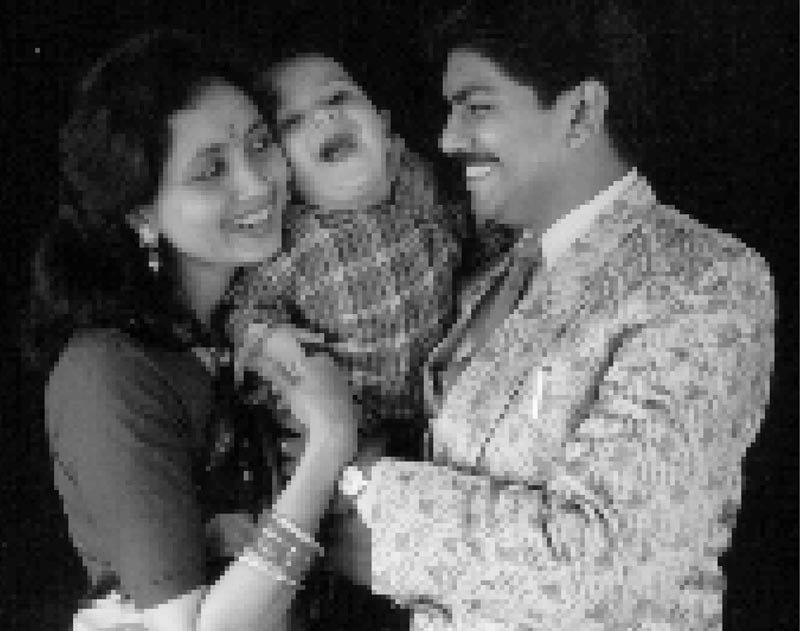
Tete-a-tete of the kind mentioned above can be heard once in a while in all families. There is no denying that children can be a source of embarrassment to their parents. But the pertinent question is whether Chintu and Mintu alone share the burden of total blame? Isn’t part of blame due on their parents as well? Fact of the matter is that their parents are more to blame.
Empathise with a child
Why Chintu is a chimera, and Mintu a maverick? No need to drive yourself crazy over this. What is needed is a peek into child psychology and an understanding of intelligence quotient (I.Q.). Based on this knowledge you need to connect with your children affectionately as a friend. For then and then alone you can mould them to your taste.
Doesn’t matter if you fail to strike cord with youngster, your facial expression and sentience are easily understood by the child. Nobody is a better face reader than a child. If you can’t connect with child, the child will. And you can see it for yourself. When you talk to a child belligerently or tauntingly, the child pays you back in the same coin. Not the least because he intends slighting or disobeying you. But because, he is wired that way. Tit for tat, the child believes, is best way out. In the same metre, those who are lively and restrained in behaviour, their children too grow up to a gracious and balanced personality.
Children learn better from example than from precept. The whole lot of their activities are psychologically propelled. Even as parents are totally oblivious of them, children imbibe bulk and nuances of all that their seniors do. They analyse their observations and reach to their own definitive, though immature, conclusions.
If parents desire to have ideal sons and daughters they must themselves present an example of idealism before their tiny tots. If you desire your children to be well mannered, well behaved, and morally upright; make sure you yourself have these qualities in ample measure.
Before pointing a finger at your juniors do remember they are copy cats of your own environment and your own image. Children have amazing ability to argue. So make sure you have a vocabulary of interesting answers and anecdotes when you confront them. If you feel telling basics will do, and nuances are not meant for children; then you are mistaken.
May be, then, the nuances are misunderstood or misconstrued by the minors. Consequently they may go on the wrong path. Wrong notions are inimical to a balanced perspective. Hence these should be removed at the earliest possible. Otherwise children remain in dark all their life. So to say, before trying to reform children, try reforming your own self. For then children will take pride in you, and obey you most sincerely.
Advice for foster parents
Many a people who, by design or default, don’t give birth to a child, go for adoption for sake of their social status. Even as adopting a child is an exhilarating experience, it way well-nigh prove to be a traumatic experience as well.
Sample this. Mona is 17 years old and a student of B.A. first year. When she was just 6 months old, her parents gave her custody to her maternal uncle. Mona is an adopted child, but has an axe to grind with her foster parents.
Says Mona—‘‘Mother pokes her nose even in trivial matters. She complains that I am good for nothing and that I loose my temper often.
One day my biological parents paid visit to us. I gave them company when they went out for marketing. This infuriated my foster parents. They said—‘‘If you don’t like us, and you desire to live with your natural parents, well, you are free to go to them.
I was shocked and looked at them in disbelief. What was my fault, I tried hard to fathom. I grew up with my step parents right from infancy, and here they are, talking thus. What is my lot now, I thought. Between devil and deep sea, I guess. Is it a crime that I exult on meeting my blood relations?’’
In many instances, adopted children though loved by their foster parents, are an eye sore for other siblings of host household. Envious members of the family have an eye on ancestral property which they are loathe to share with adopted child.
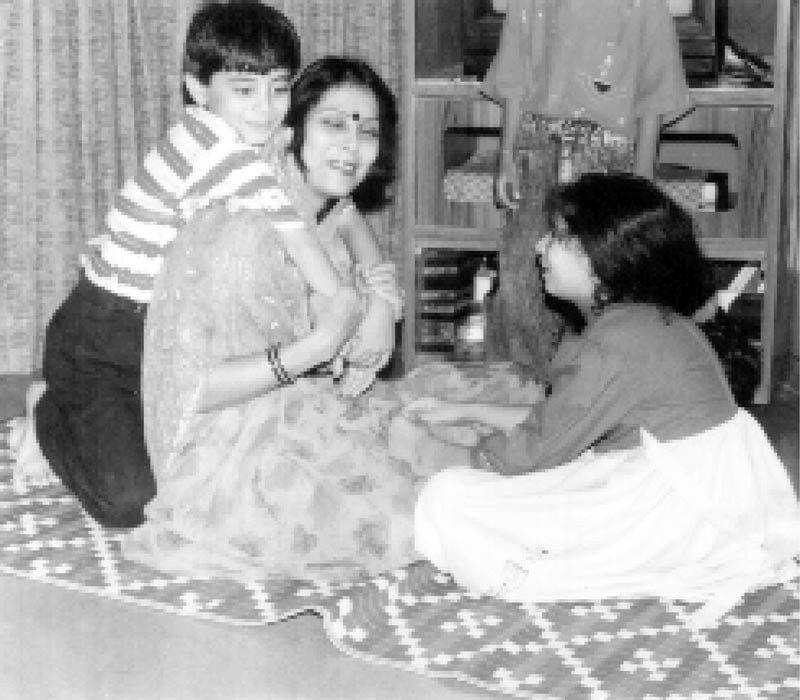
Children in such hostile environment become mental wrecks. They develop a sanguine sense of insecurity. Whether they would remain heir to their elder’s legacy, or be replaced by someone else—is one thought that haunts them most of the time. Thus, it is easy to see how an adopted child puts host family in a spiral of suspicion and mistrust.
Not uncommonly, many a foster parents, in course of time, become biological parents in their own rights. This creates piquant situation for the adopted child, who naturally stands to loose in comparison to the natural offspring of its foster parents.
Such situations are common when adopted child is from within the circle of close relatives. Often it so happen that child in question fails to identify both with his biological as well as statutory parents. This upsets caretaker couple who feel cheated at emotional level. Hence adoption is no cakewalk and demands caution. Because hopes and aspirations of all children are similar irrespective of their sire status. Remember
❑ If you wish to adopt minor of a close relative, make sure that they part with their child in spirit of renunciation. The idea may sound demonic, but is worth its while. If biological parents persist with their emotional ties, the child would be a total mishmash.
❑ As far as possible, give priority attention to an orphaned child. Because the deal between close relatives rides rough shod on child’s emotional stability. There may be irksome reminders that child is not natural-born in family. That its biological parents reside elsewhere. Such incursions on child’s sensibilities end up making him/her bellingrent and rebellious.
❑ Should it come to your notice that your adopted child is being cornered or ill-advised by your near and dear ones; you must immediately take remedial steps. Tell child in question how much you love and care for him/her. And that your compassion will never falter, come what may. That he/she is a positive source of hope and strength for you. This will instill in him/her a sense of belonging and bonhomie. At the same time teach them to parry away queries relating to their birth status, no matter who puts them.
❑ For apt and all round growth of child it is essential that you avoid extremes. Neither to much of love, nor negligence or high-handedness. But a balanced interface with youngster. This would pay you rich dividends.
❑ Don’t pin high hopes on juniors but make a note of their natural leanings, and encourage them accordingly. Too much of needling in their affairs is inapt. Rather, they should be motivated to be independent. That would foster their self confidence and they would prove to be an asset not only to you, but also to society and the nation.